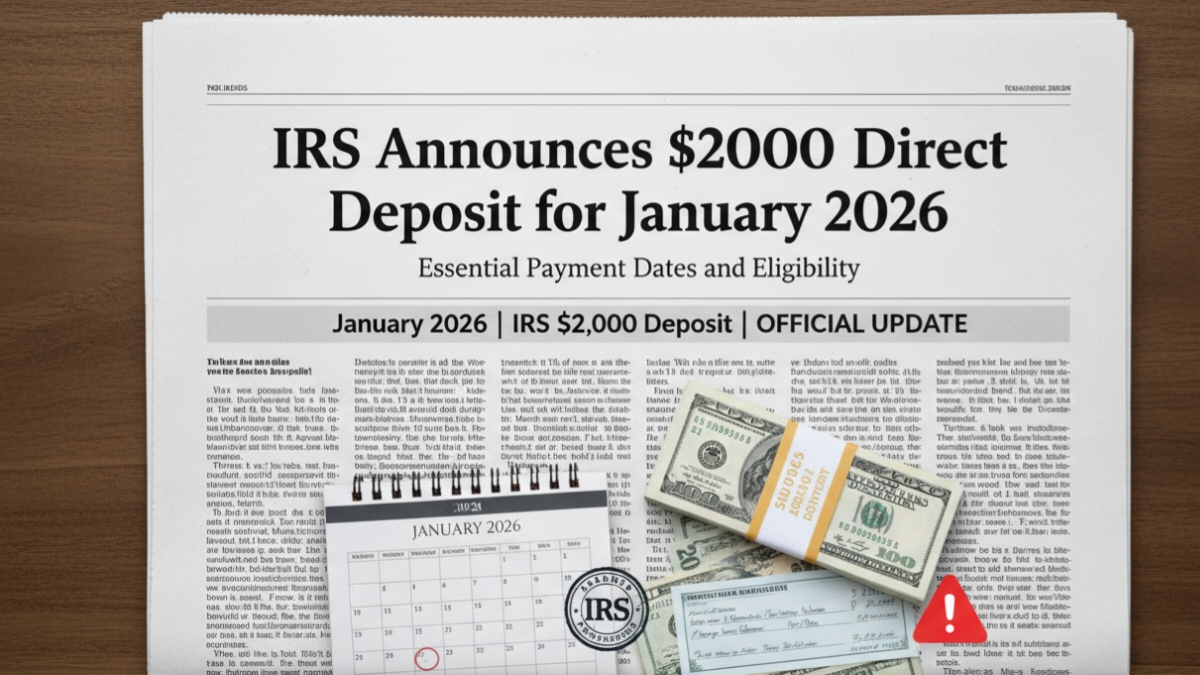
As 2026 begins, many Americans are seeing eye-catching claims online about a $2,000 direct deposit from the IRS arriving in January. These posts look convincing. They mention income limits, payment dates, and eligibility rules that feel official. For families still managing high prices for food, rent, and healthcare, the idea of quick financial relief feels hopeful and urgent. But this is exactly why these claims need careful examination.
Why This $2,000 Claim Is Spreading Again
Stories about large IRS payments are not new. Similar headlines have appeared many times since the pandemic stimulus years. Most follow the same pattern. They use confident language, detailed charts, and familiar terms like “direct deposit” and “payment waves.” Over time, repeated sharing makes the story feel real, even when no official announcement exists. Screenshots of normal tax refunds or early credit payments often add to the confusion.

What the IRS Has Actually Announced
Despite what social media posts suggest, the IRS has not announced any universal $2,000 direct deposit for January 2026. There is no new law approving such a payment. There is no IRS notice, press release, or guidance explaining eligibility or timelines. This absence is important. Real IRS programs are never introduced quietly. In the past, stimulus payments were discussed publicly for months before being approved and paid.
Understanding Normal IRS Payments in January
यह भी पढ़े:
 Social Security Garnishment in 2026: What You Need to Know About Rules, Affected People & Timing
January is always an active month for the IRS. Tax season preparation begins, and some refunds or credit-related payments start appearing in bank accounts. These are routine and depend on individual tax situations. They are not new stimulus checks. When these normal deposits appear online without explanation, they are often mistaken for something new.
Why False Payment Claims Can Be Harmful
Misinformation does more than create disappointment. It opens the door to scams. Fraudsters often use viral payment stories to trick people into sharing personal or banking information. There is also a financial cost. Some households delay paying bills or making plans while waiting for money that never comes. Over time, this cycle weakens trust in real government communication.

What Taxpayers Should Do Instead
The safest way to stay informed is to rely on official sources. IRS.gov, official IRS statements, and licensed tax professionals provide accurate updates. Any genuine relief program would be clearly announced through these channels. When it comes to taxes and money, patience and verification matter more than speed.
Disclaimer
This article is for informational purposes only and does not constitute tax, legal, or financial advice. Tax laws, IRS procedures, and government relief programs may change. Readers should consult official IRS resources or a qualified tax professional for guidance specific to their personal situation.